If you’ve been wondering how to review continents and oceans with 5th graders, you’ve come to the right place. I can help!
Most of our students know the basic concepts of continents and oceans because they’ve learned them in earlier school years.
However, I always find that there are some gaps that I need to remediate for my students.
I find it beneficial (and fun) to do a quick, zoom-by review of continents and oceans so that everyone is on the same page before we move into latitude and longitude, types of maps, and etc.
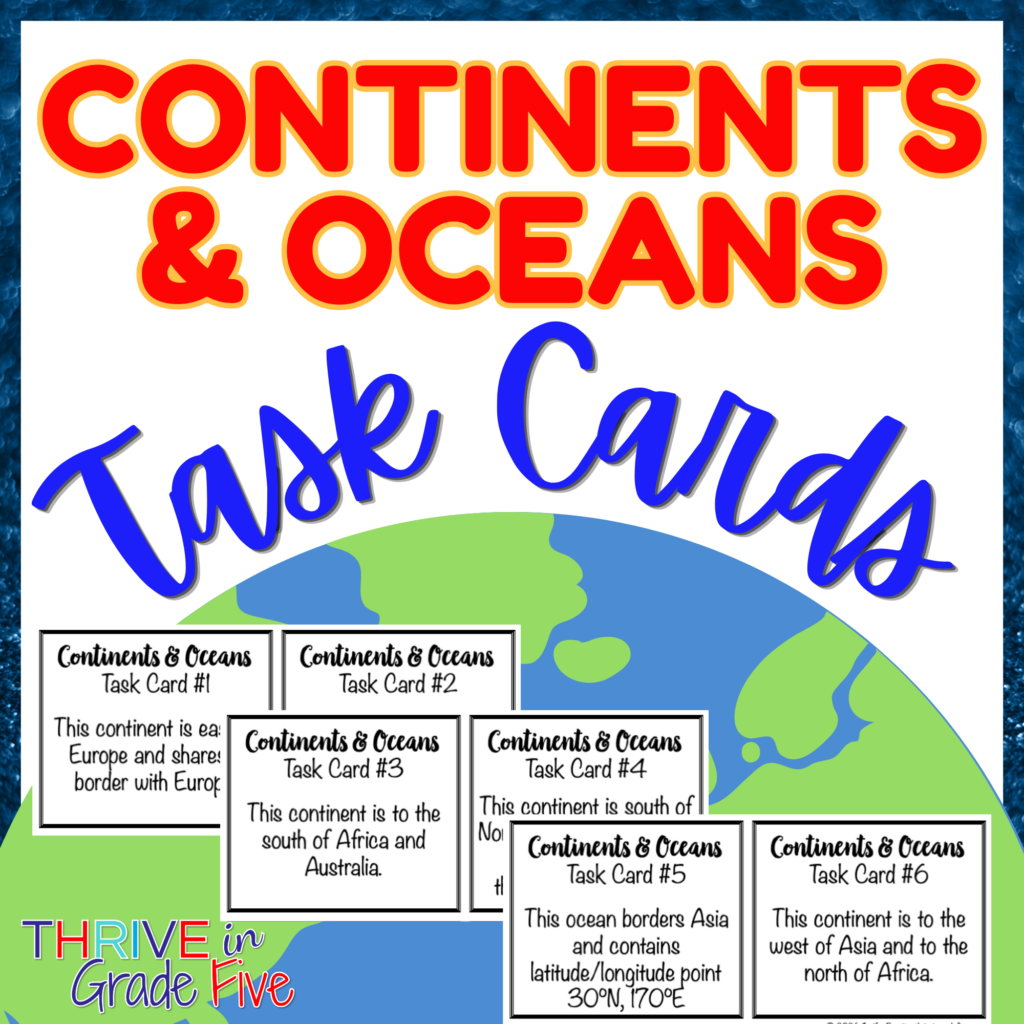
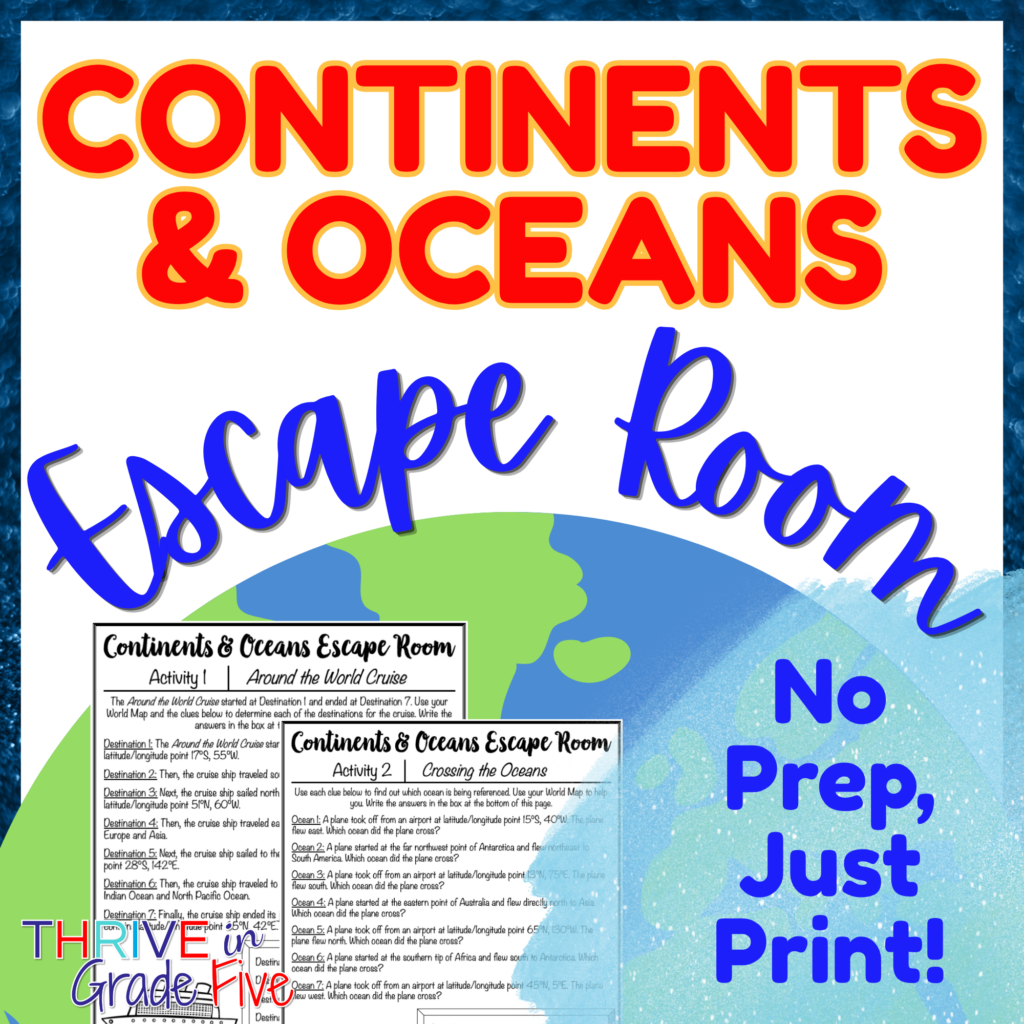
Ready-to-Use Resources to Teach Continents and Oceans
Vocabulary / Concepts to Review
Students need to know that continents are large landmasses.
We all know what oceans are, but can we really comprehend the vastness of the oceans, or that more than 70% of Earth is covered by oceans?
What are hemispheres? Hemispheres are halves of the Earth. I recommend taking a styrofoam ball and cutting it in half in front of students. You can use this ball to show them the Northern and Southern Hemispheres, along with the Eastern and Western Hemispheres. Students need to know that the Equator is the dividing line for the Northern and Southern Hemispheres, while the Prime Meridian is the dividing line for the Eastern and Western Hemispheres.
Students need to know the difference between absolute location and relative location. Absolute location is an exact location on the Earth, like we see with latitude/longitude points or street addresses. Relative location is a location based on where other places are located. For example, the gas station is to the north of the school.
The compass rose can be simple and contain directions North, South, East, and West. What you’ll find with upper elementary resources, however, is that the compass rose will contain intermediate directions, like Northeast, Southeast, Northwest, and Southwest.
What makes each continent unique?
While my students come in (usually) having a decent understanding of continents and oceans, I like to add a little something.
We briefly touch on culture, climate, and/or what makes each continent special. I know that middle school students will have a full class on geography and culture of each continent, but I think my students are better able to remember and make connections when they know at least a little about why each continent is unique.
North America – Of course, this is where we live. This continent includes all major biomes (aquatic, grassland, forest, desert and tundra).
South America – The Andes mountains are world’s longest mountain range.
Australia – 90% of Australians live on the coast.
Africa – This continent contains Earth’s longest river, the Nile.
Europe – Denmark has the oldest monarchy in Europe.
Asia – 60% of the world’s population lives in Asia.
Antarctica – This continent is not part of any time zone – visitors adhere to their time zone of origin.
Fun Ideas for Reviewing Continents & Oceans
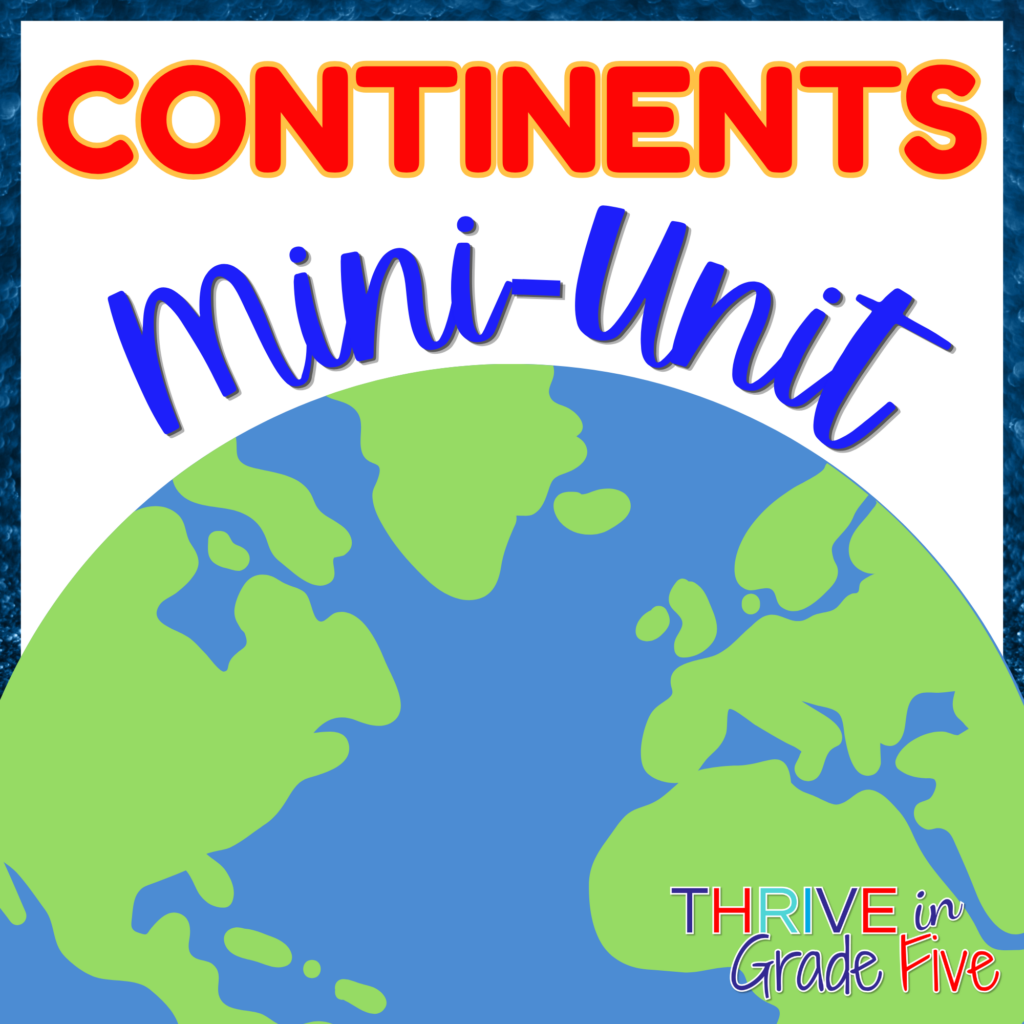
1. Don’t underestimate the power of coloring. Provide a World Map. Give directions, like color Antarctica purple. Label each ocean. This resource includes a World Map with instructions for coloring and labeling: Continents Mini-Unit
2. Have students plan a cruise around the world. Give students a World Map and tell them they must plan a trip and show dots for their route. They’ll need to include the features for each continent, like in Australia, they want to see the Great Barrier Reef and dance with kangaroos. Students must refer to relative and absolute location in describing their route around the world.
3.Ask each student to make an “I’m thinking of” quiz. Examples: I’m thinking of the ocean that is to the west of North America. I’m thinking of the continent that contains coordinates of 50 degrees north, 75 degrees west. I’m thinking of the ocean that lies at the intersection of the equator and 30 degrees west.
Ready-to-Use Resources to Teach Continents and Oceans