If you’ve been struggling with how to make geography skills relevant and fun for your fifth graders, you’ve come to the right place!
When I was in 5th grade, I so clearly remember round robin reading in my textbook about mesas, buttes, etc and wanting to be anywhere but there. It was hard to stay awake.
Make landforms fun!
We have to cover landforms, but make it fun.
Get some playdough and allow students to create the different landforms at their desks while reading about them.
Get silly – Who can create the most interesting plateau? Allow students to decorate their landforms with pom poms, macaroni, glitter, whatever you have on hand.
Another idea is to give students large sheets of construction paper and have them sketch several landforms. Then, they’ll practice map keys by coloring the landforms different colors and marking them in the map key.
Give students hands-on practice with important geography terms!
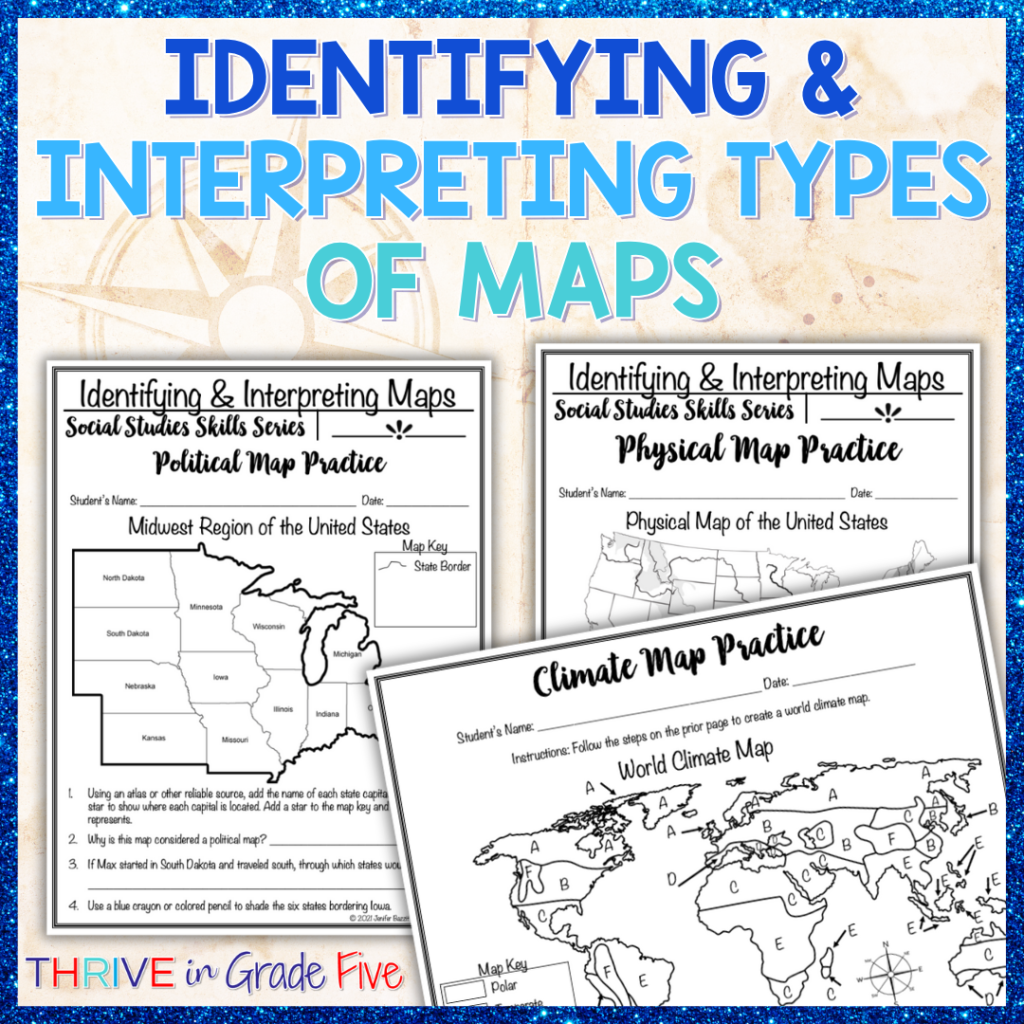
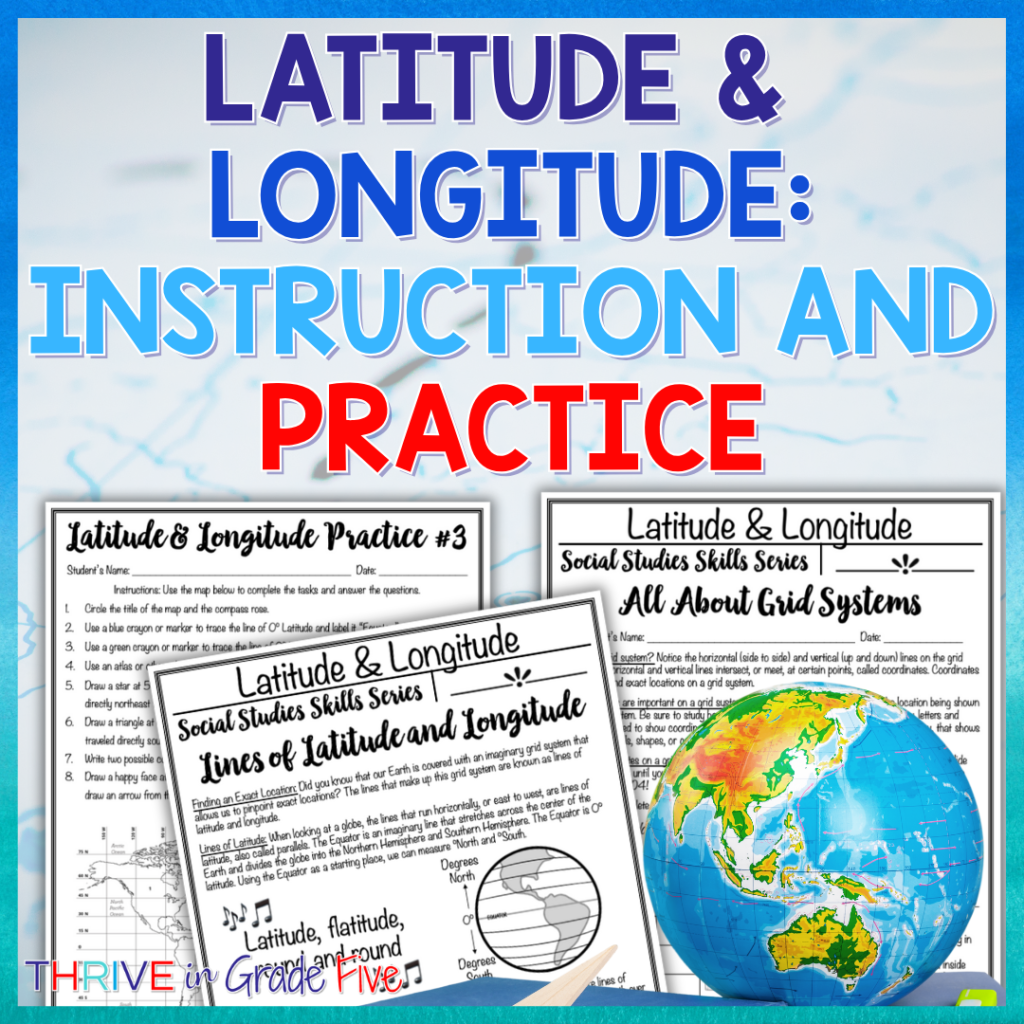
Students should be given opportunities to practice different types of maps, latitude, longitude, relative location, absolute location, the compass rose, and the map key/legend.
The no-prep way to do this is to use these two resources:
Make lots of maps!
The only way to get better at reading maps is to make maps.
There are so many varied ways to make maps.
You can make classroom maps, school maps, neighborhood maps, pretend maps of fictional places, and real maps showing the placement of stores in a nearby shopping center.
Touch on aspects of human geography!
Human geography is defined as “the branch of geography dealing with how human activity affects or is influenced by the earth’s surface.”
Google Earth is great for this. Geography becomes relevant when you actually talk about the people there.
When you teach about continents, talk about one country or people group per continent, even do a Google Earth tour!
Assign a project that boosts creativity AND reviews geography skills!
Practice maps by creating a pretend country and making several different types of maps.
Have students create a variety of maps for their pretend country, i.e. political, physical, product/resource, climate, and etc.