If you’ve been puzzled about how to help students analyze primary sources, you are in the right place.
Primary sources add depth and dimension to your social studies lessons.
I think of primary sources as the magic part of social studies that helps make history come to life.
Some primary sources are self-explanatory, but there are many primary sources that require guidance and instruction on the part of the teacher.
What are primary sources?
Primary sources can be a number of things, but basically, a primary source is a record or object created by someone who lived through a time period or witnessed an event.
Primary sources can be:
- Letters
- Images, Photographs, Paintings, Drawings
- Objects
- Newspaper Excerpts
- Diaries/Journals
Use Excerpts of Primary Sources
I would never give 5th graders an entire primary source and expect them to analyze it.
Instead, I use excerpts, or pieces of the primary source along with direct instruction.
By breaking longer primary sources into pieces, you make the primary source more manageable, understandable, and engaging for students.
Watch this video for practical, ready-to-use tips for using primary sources in your classroom:

Ask Questions
I know, I know, this goes back to teaching 101, but how do we gauge and assess students’ understanding of any given topic?
We ask questions!
I like to use questions in my introduction of the primary source.
I ask questions to introduce the source rather than ask questions after students have learned about the primary source.
Example Questions:
Why do you think the artist included this background? (image)
Why do you think the writer of this primary source included this phrase? (written)
Why do you think this advertisement was placed in the newspaper? (newspaper)
Why do you think the artist used this facial expression for a particular person? (image)
What might have been the purpouse of this object? (object)
I recommend using a variety of higher-level and lower-level questions to guide your students in thinking about and analyzing primary sources.
Model Your Thinking
Modeling your thoughts for students is powerful for any subject matter, but especially for primary sources.
Modeling your thinking means that you are speaking aloud what you think when you look at a primary source.
For example, if I displayed this object on my technology board, I might model my thinking this way:
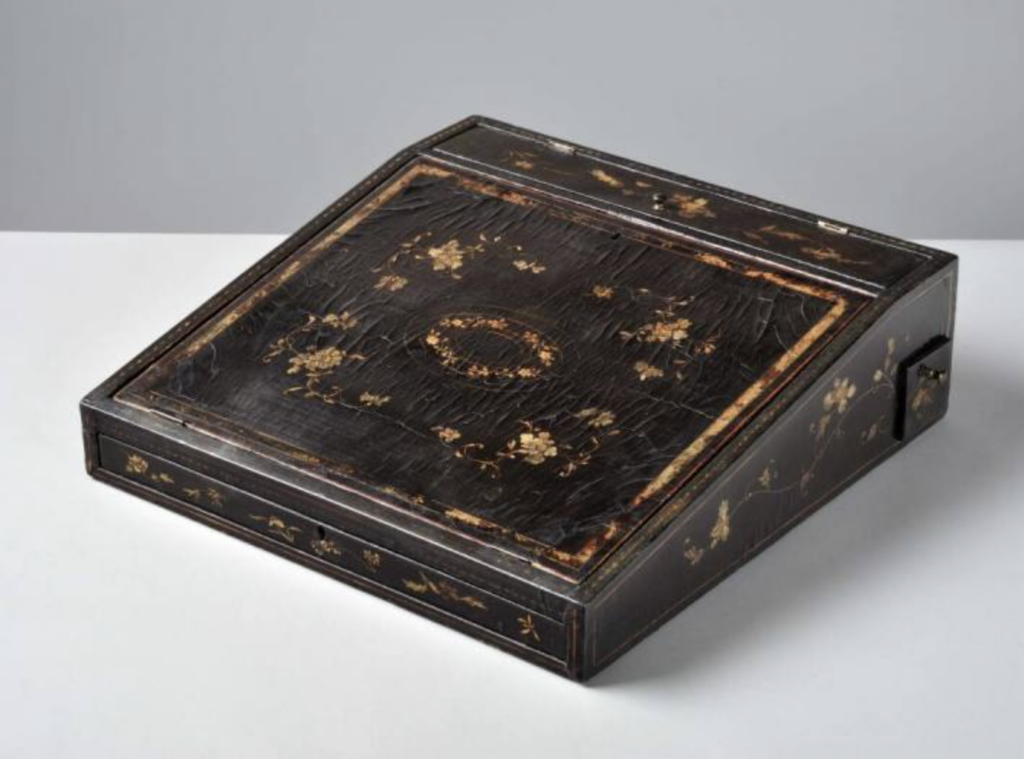
“Hmmm, I notice that this object looks like it is made out of carved wood. I wonder what its purpose was.”
“It looks as though the top can be taken off or flipped up, so I wonder if items were stored inside this object.”
“I notice that from top to bottom, the object is slanted, so I wonder if it could be some sort of a surface for drawing or writing.”
“Students, what do you notice and wonder about this primary source object?”
Sometimes students will guess an` object’s purpose, but often they do not have any idea, so it’s fun to get to tell them what the object was used for and who used it.
I love the “Ohhh” and “Cool” responses that I hear from students.
This object is a portable writing desk purchased by the Washington Family around 1795. There is space in the interior for letters, pens, ink, and etc.

How to Choose the Best Primary Sources
Choose primary sources that relate to your content and are relatable to students.
Remember, you don’t always have to use written primary sources. There is an abundance of images and objects to use as well.
The explosion of technology helps us teach about the past using objects that we’d normally never see. For example, take some time to explore Mount Vernon’s online gallery.
Choose primary sources that are interesting to you because if you are bored looking at them, I guarantee your students will be bored as well.
Often, social studies units, like my Road to Revolution Unit, American Revolution Unit, and Civil War Unit, will have included primary sources, but if you are teaching without a pre-made unit, you may have to find your own primary sources.
I recommend Google searching your topic + primary source and looking through the first few results. Remember, the most reliable primary sources often come from .edu and .org websites.
This video will walk you through my favorite primary source to use while teaching Jamestown:
Grab a freebie here:
Help Students Analyze a Primary Source Portrait from the American Revolution
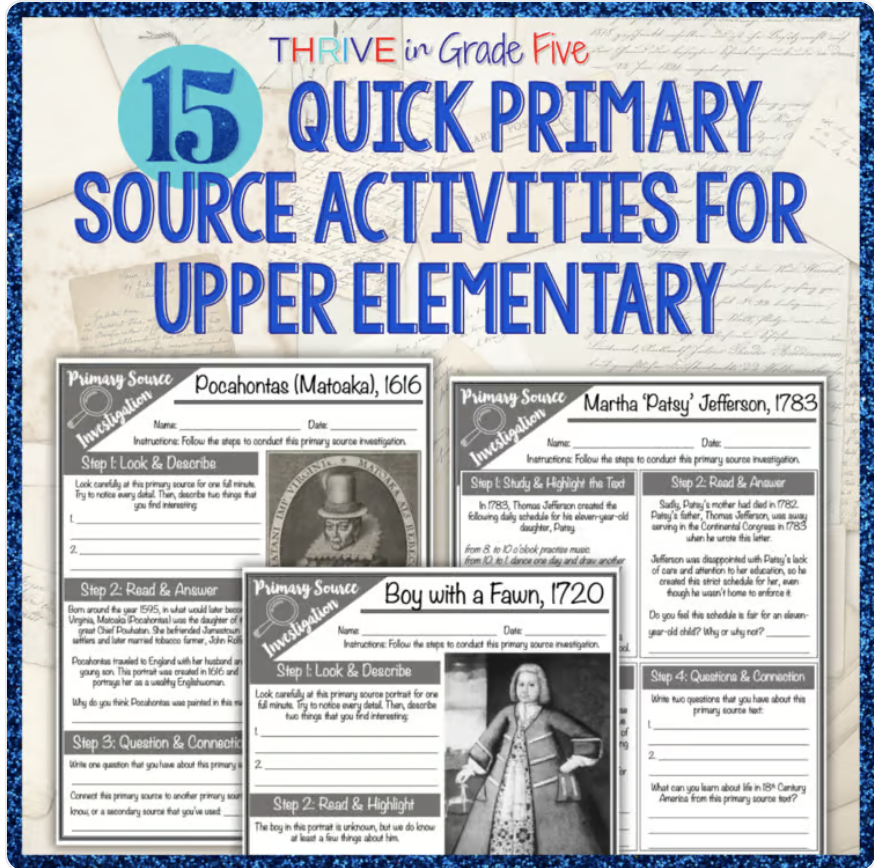
If you are looking for ready-to-use primary source analysis activities, look no further: